
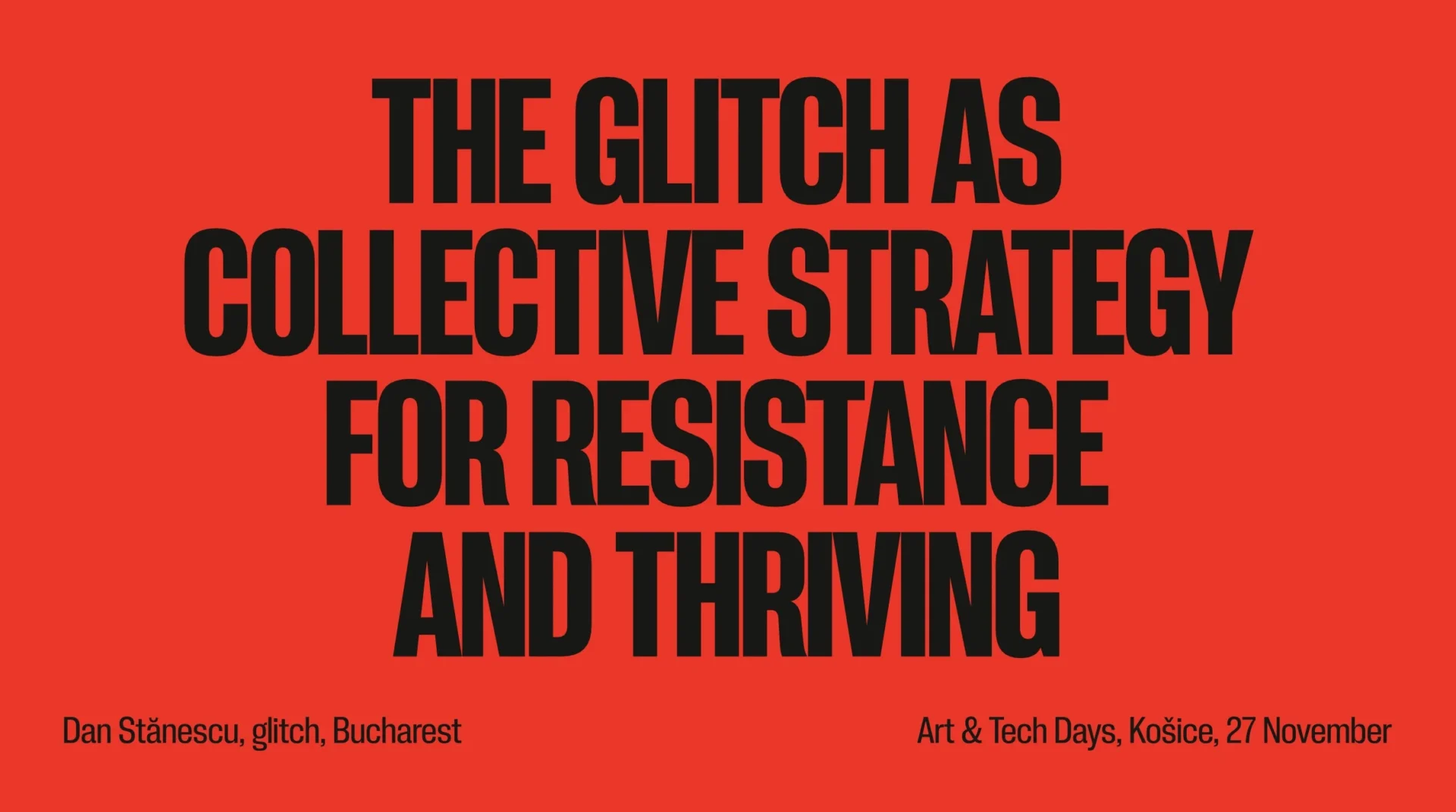
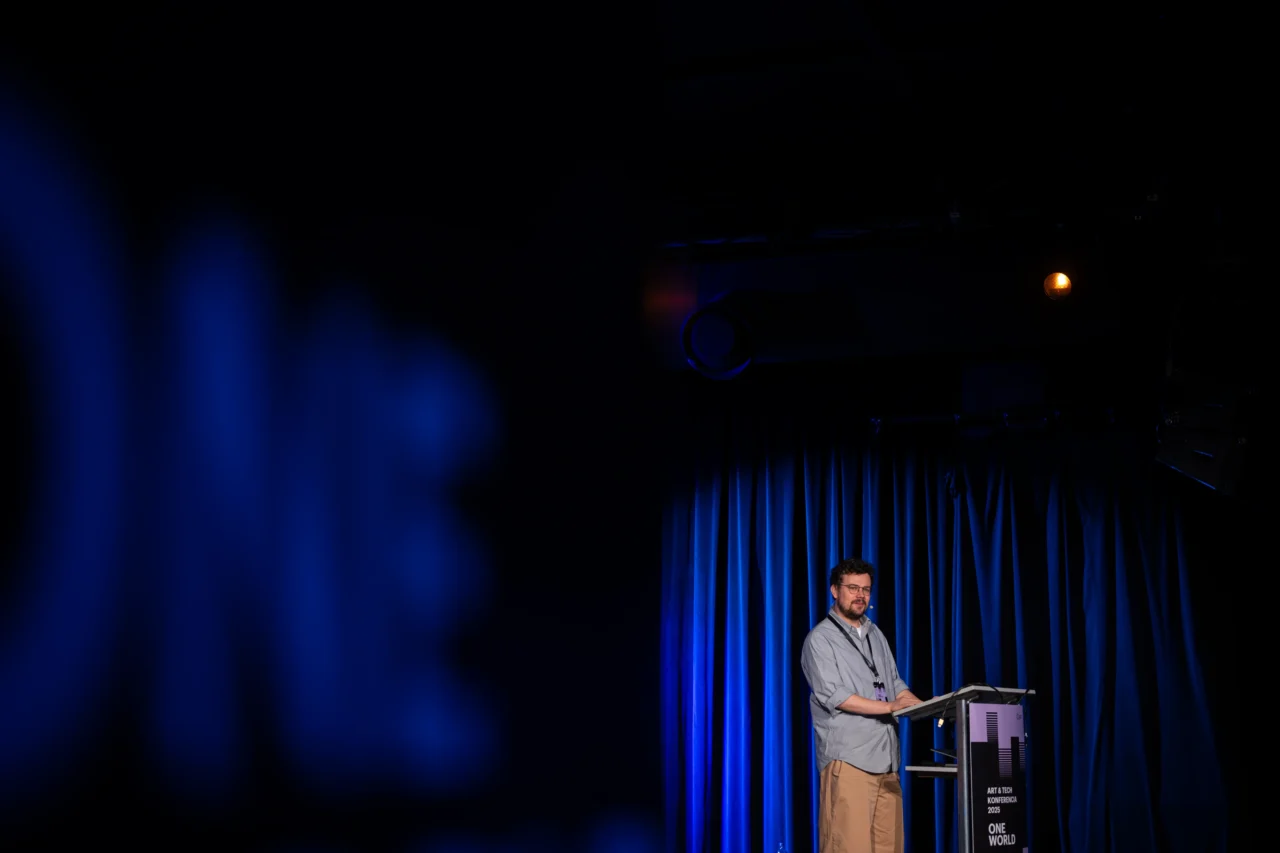
On November 27, 2025, Glitch founder Dan Stănescu delivered a keynote at Art & Tech Days in Košice, Slovakia — a festival of media arts, technology and digital culture. The keynote, titled “The Glitch as Collective Strategy for Resistance and Thriving,” mapped four domains of contemporary life where glitch-thinking can serve as a tool for meaning, resistance, and care.
Why a design studio was invited to a tech festival
Košice is a UNESCO Creative City of Media Arts. Every November, its Art & Tech Days festival brings together artists, technologists, designers and policymakers to explore the friction between culture and innovation. Past speakers have included architects like Winy Maas (MVRDV), bio-design pioneers, and Ars Electronica curators.
This year, they invited us. Not because we write code or design installations — but because we named our studio after a glitch, and we’ve spent a decade turning that word into a philosophy of work.
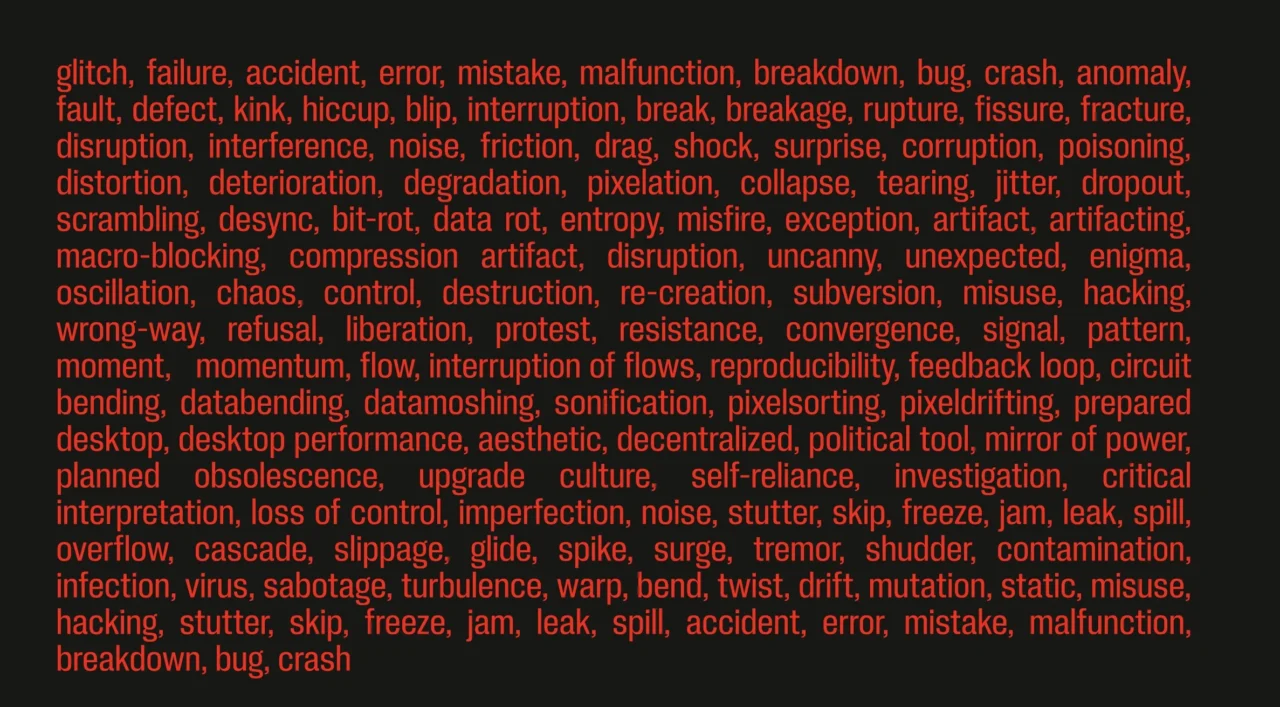
The talk was called “The Glitch as Collective Strategy for Resistance and Thriving” — a 40-minute keynote across 72 slides, tracing how glitches can be more than errors. How they can be tools for creative resistance, collective action, and new ways of building a practice.
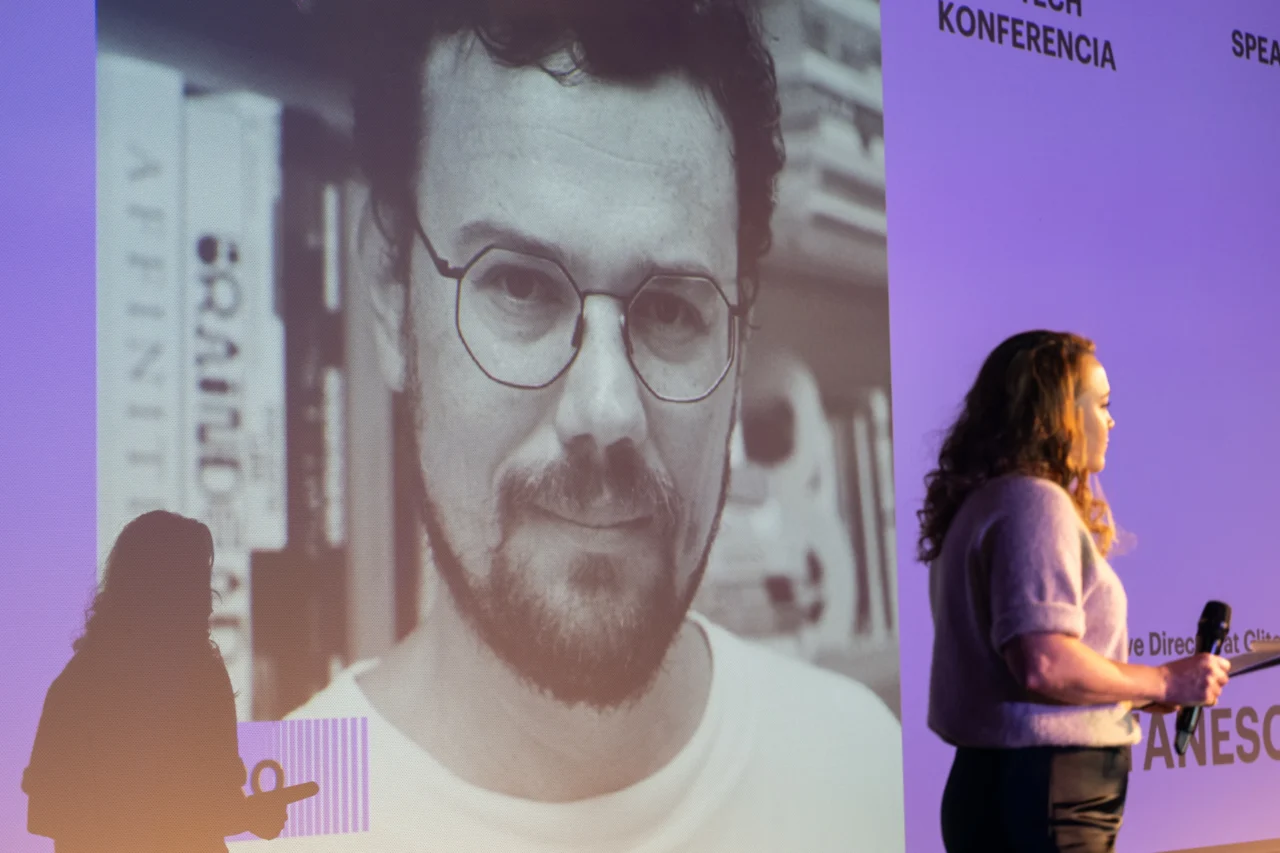
The argument: we live in an over-optimized world
The talk opened with a personal confession: “I shouldn’t be here.”
Dan’s path from electronics engineering to copywriting to founding a purpose-driven creative studio has been — by any linear metric — a series of accidents. A student organization form left on a desk. A junior competition won on a whim. An agency that encouraged employees to start their own companies. A chance meeting with a cultural manager who became a life partner.
“What if we’re not where we are despite the accidents — what if we’re here because of them?”
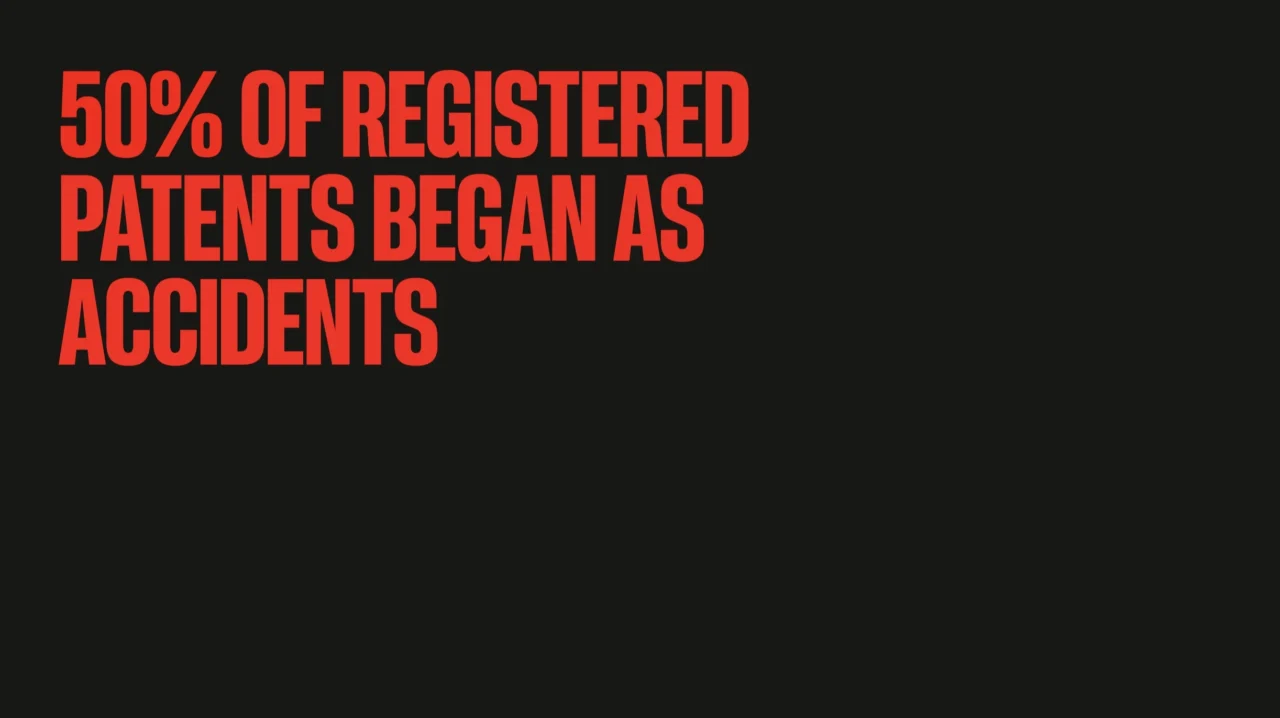
From there, the keynote mapped the contemporary condition: doomscroll culture, attention fracking, AI slop, accelerationism, algorithmic control. A world that has optimized work into competition, time into throughput, art into content, and money into centralized returns.
And then it asked: what if a glitch is the tool we use to break the spell?
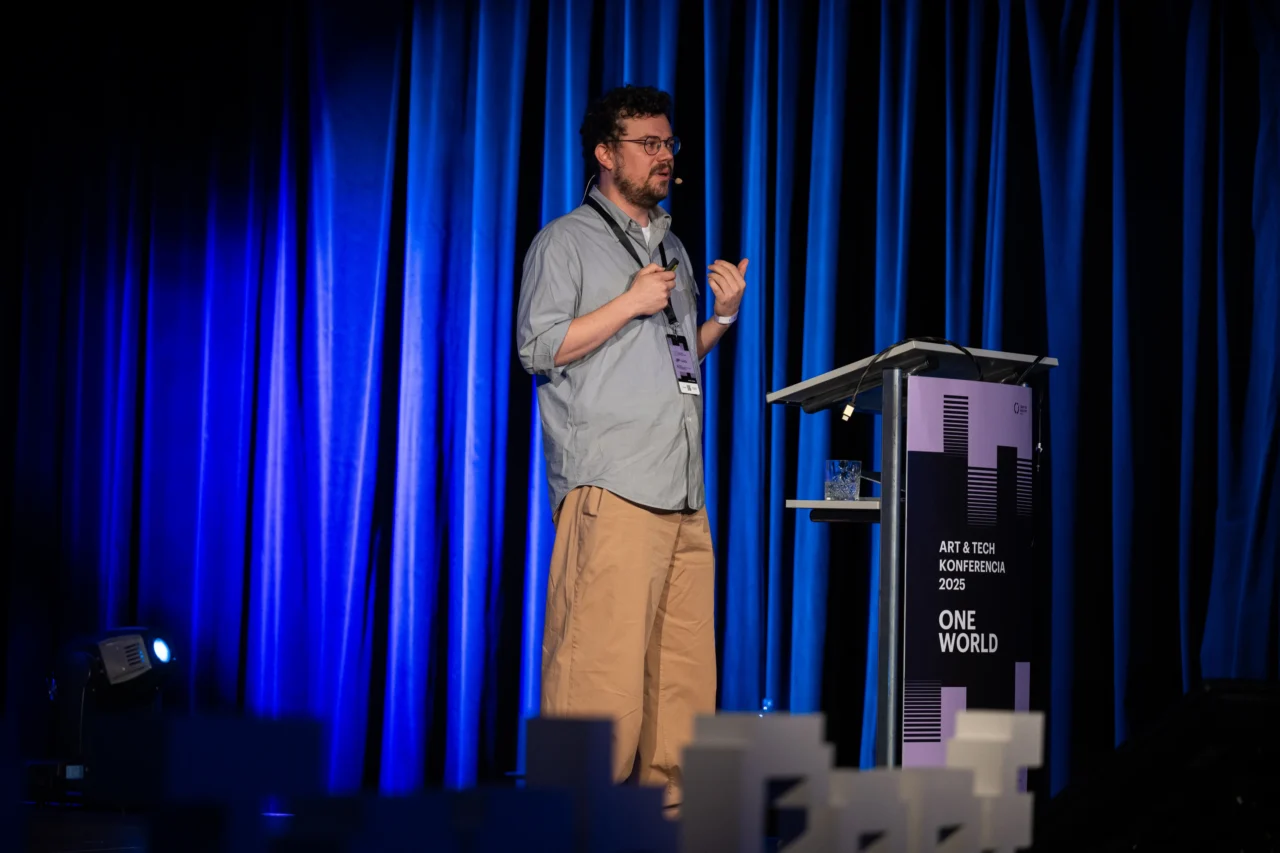
A theoretical framework: from Menkman to Russell
The talk drew on two key thinkers who’ve shaped how we understand glitches beyond the screen.
Rosa Menkman, the Dutch artist and theorist, defines the glitch as “an interruption that shifts an object away from its ordinary form.” Her Glitch Studies Manifesto (2010) argued that when smoothness breaks, the underlying structure becomes visible — and with it, new possibilities. As she writes: smoothness hides vulnerability; if you can see the vulnerability, you can turn it into an opportunity.
Legacy Russell, in her Glitch Feminism: A Manifesto (2020), expanded the concept beyond aesthetics into identity and politics — the glitch as “a vehicle of refusal,” a way to resist the body as coercive architecture. Russell’s work reframes glitching as a collective political project, not just an individual artistic gesture.
Both thinkers underpin the talk’s central thesis: that glitches, pooled together and used deliberately, stop being random errors and become strategy.
Four domains, four case studies
The keynote moved through four domains — Work, Time, Money, Art — each with concrete examples of the argument in action: how friction, deliberate slowness, and coalition-building can serve as tools of resistance and thriving.
Work: from competition to coalition
The talk traced a line from the Neo-Luddite movement — Brooklyn Luddite clubs, APPstinence groups, LOG OFF kids choosing dumb phones over smartphones — to the GameStop short squeeze of 2021, where Reddit’s “dumb money” coordinated to break a system that seemed invincible.
And then to our own work: the MozaiQ Coalition. When Romania’s largest LGBTQ+ rights organization asked Glitch to build a campaign for same-sex civil partnership, we didn’t pitch alone. We invited every agency we knew. Over 20 agencies, dozens of artists, 117 different executions — all under one umbrella: Iubim La Fel (“We Love The Same”). Not competition, but solidarity disguised as work.
Time: from speed to friction
Mark Zuckerberg said “move fast and break things.” We did. We broke everything.
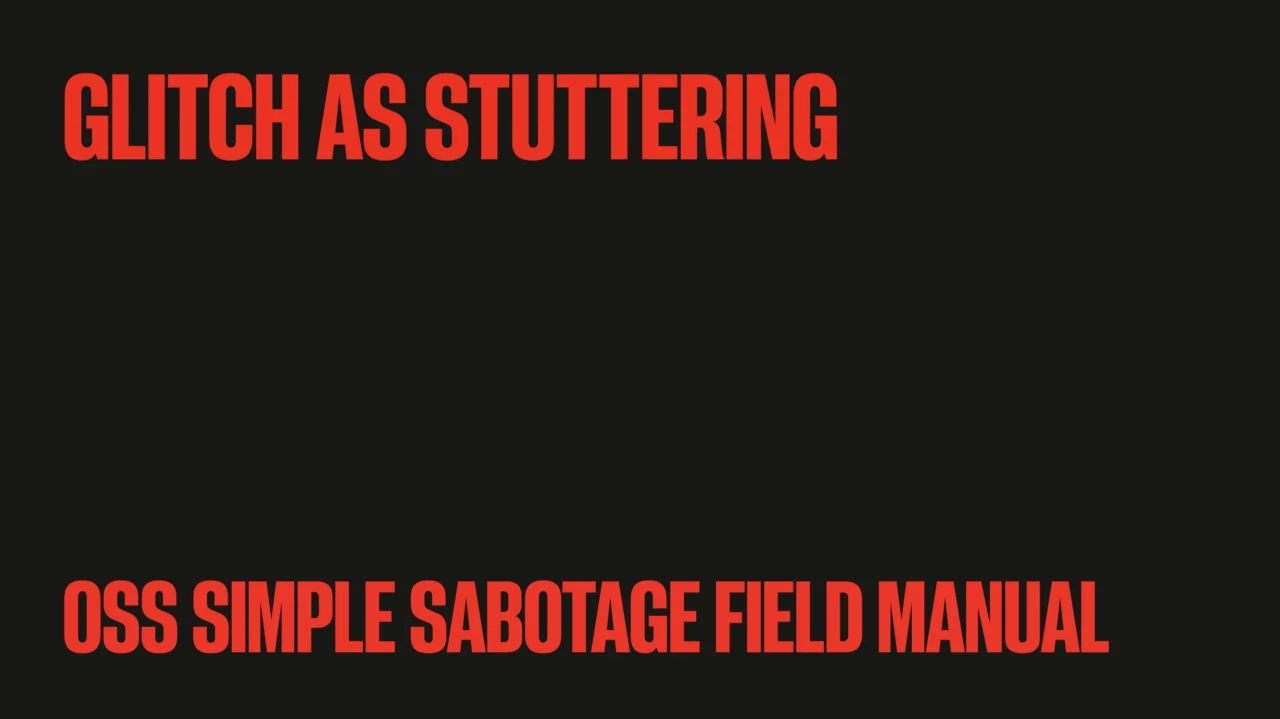
The talk referenced the OSS Simple Sabotage Field Manual (1944) — a real CIA precursor document that taught occupied citizens to resist through strategic inefficiency: “Bring up irrelevant issues as frequently as possible. Make speeches. Insist on doing everything through channels.”
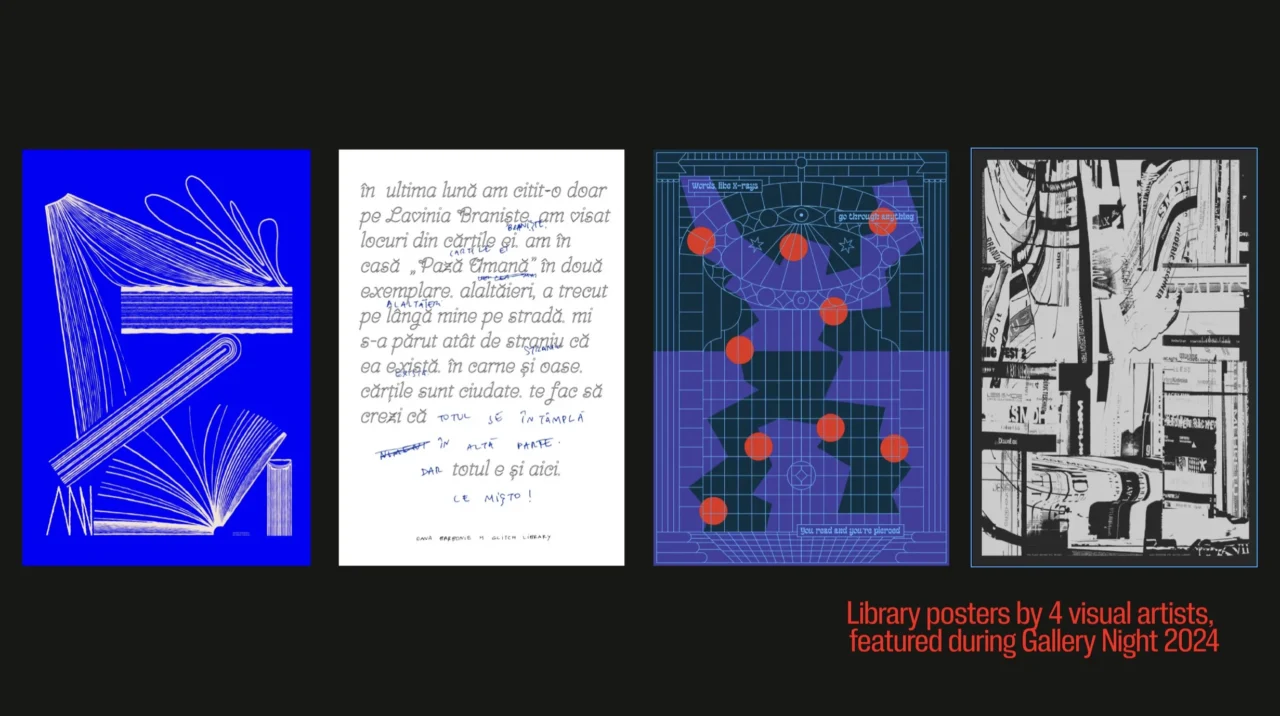
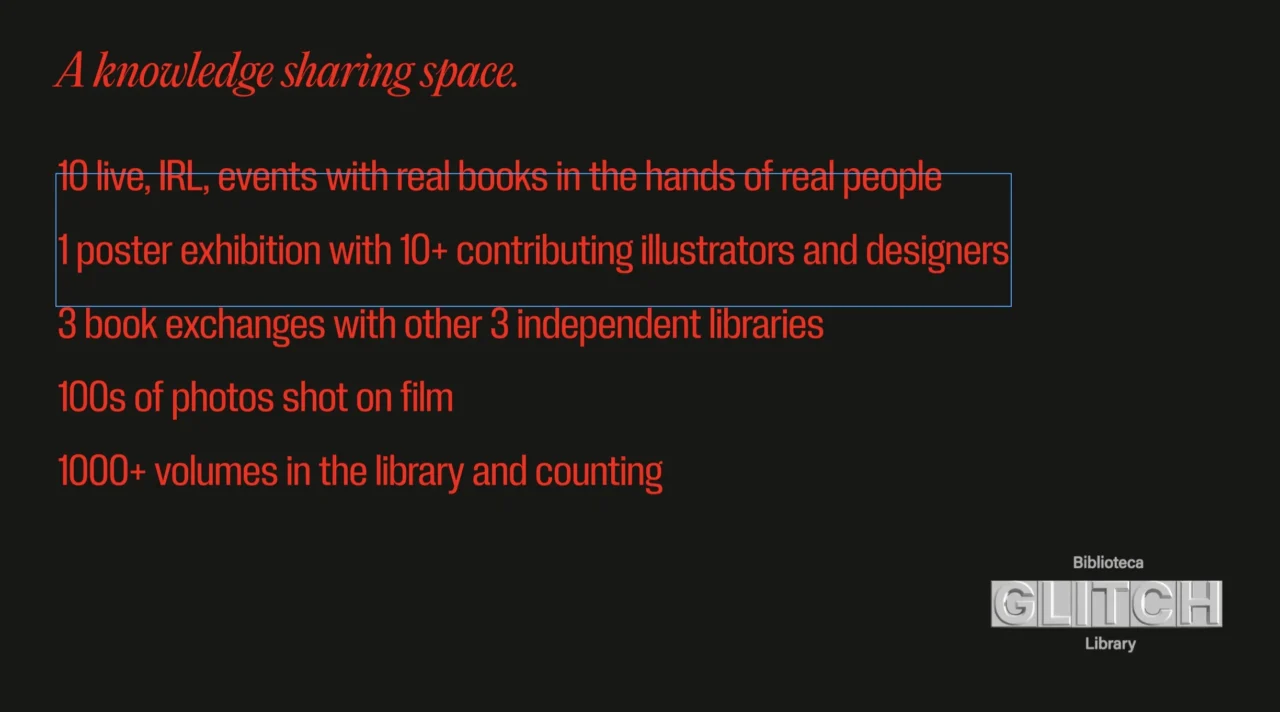
In a world that demands constant acceleration, slowness becomes subversive. Which is why Glitch built Biblioteca Glitch — a physical library of over a thousand books about design, culture, theory and art. No algorithms. No search bars. Just shelves, chairs, and people. Ten live events. A poster exhibition with ten artists. Book exchanges with three independent libraries. All shot on film.
Because efficiency is for machines. Presence is for humans.
Money: from extraction to commons
Drawing on Mark Fisher’s observation that “it’s easier to imagine the end of the world than the end of capitalism,” the talk presented CLASAT — a Romanian film about AI and corporate surveillance for which Glitch built a new economic model. Instead of a traditional agency-client fee, the entire communications ecosystem (PR, web, design, influencers, media) contributed work in exchange for a share of the film’s future profit.
Partners, not vendors. Stakeholders, not costs. The glitch as commons.
The section also explored Yancey Strickler’s Dark Forest Theory of the internet and Metalabel’s GroupCore model — a post-industrial guild for creative cooperation. Their Dark Forest Anthology of the Internet: 1,500 copies, 11 authors, $60,000 in sales, all split among contributors.
Art: from content to craft
The final section asked what it means to “be aggressively human” — a phrase borrowed from Rosalía — in an age when every image can be generated and every voice cloned.
It referenced Nightshade, the data-poisoning tool with 1.6 million downloads that corrupts AI training data as an act of artistic resistance. And then it showed Glitch’s own answer: the Lumea9 campaign for BRD Bank’s sustainability platform, where we briefed four artists to make advertising that consumes no electricity.
Megan Dominescu hand-wove a 3-square-meter textile from recycled fabric. Iulia Groves carved a 2.2m × 1.2m linocut by hand, pressed onto linen. Craft as resistance. Slowness as strategy. The refusal to be efficient in a world that demands it.
Two broadcasts, forty-six years apart
The talk closed with two stories.
1938: Orson Welles broadcasts The War of the Worlds on CBS Radio. It’s so smooth, so seamlessly realistic, that people believe fiction is fact. The seamlessness becomes a trap.
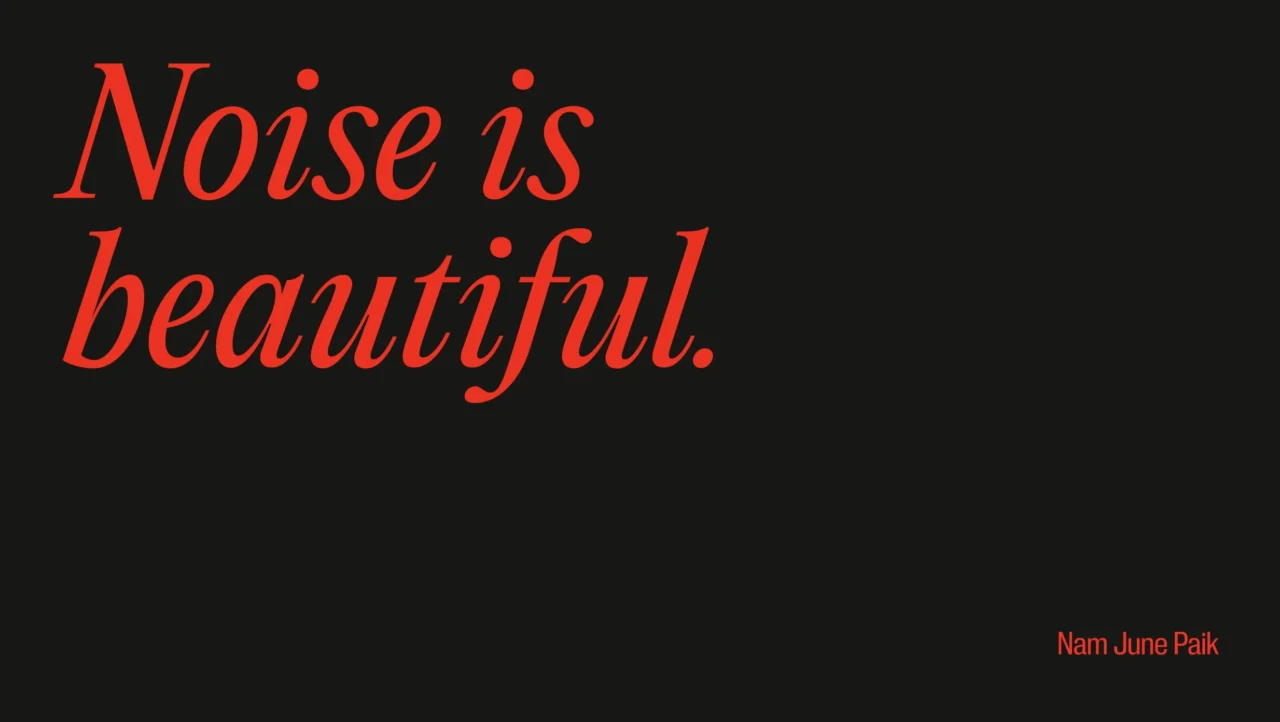
1984: Nam June Paik broadcasts Good Morning, Mr. Orwell — a live satellite link between New York and Paris. The satellite fails. The audio cuts out. The host is drunk. And Paik says: “The technical problems only enhanced the live mood. Noise is beautiful.”
Two technologies. Two glitches. Forty-six years apart. One frictionless — and it became a collective hallucination. One full of friction — and it became proof of life.
In a world that’s getting smoother every day, the rough edges start to look like freedom. The glitches start to look like proof that we’re still here. This approach is, at its core, a refusal to disappear into the seamless — and a commitment to staying present, imperfect, and alive.
About Art & Tech Days
Art & Tech Days is an annual festival of media arts, technology and digital culture in Košice, Slovakia, organized by Creative Industry Košice (CIKE). Košice holds the UNESCO Creative City of Media Arts designation. The 2025 edition, themed “One World,” ran from November 25–29 and was co-financed by the European Union under the Slovakia Programme, in partnership with EIT Culture & Creativity.
About Glitch
Glitch is a Bucharest-based creative studio specializing in branding, strategy, and communications for purpose-driven organizations. Using friction, care, and meaning as tools informs everything we do, from cultural campaigns to sustainability branding. See our full story, explore our work, or get in touch.
See Dan’s speaker profile on the Art & Tech Days website →
Photos: Tibor Czitó / Art & Tech Days 2025