
Bucharest Design Festival could only exist because of Bucharest. The city supplies its contradictions, intersections and creative tension: architecture next to neglect, specialty coffee next to mici, affection and frustration in the same sentence. The Institute asked Glitch to create the strategy, brand architecture, positioning, verbal identity and launch campaign for a new festival large enough to gather an entire creative city. We built a platform that could unite established institutions, new formats and very different audiences around one idea: design can change the relationship between Bucharest and the people who live here.
One system
The festival grew from an ecosystem The Institute had built over 25 years. Romanian Design Week had spent 13 years developing the professional design scene. DIPLOMA Show had spent 12 years giving emerging artists, designers and architects a public platform. Cartierul Creativ had spent nine years connecting cultural organisations, businesses and neighbourhoods. Each project had its own history, audience and equity.
BDF had to bring them into one legible structure while making space for new programmes. Glitch developed a hybrid brand architecture. BDF acts as the visible parent and supplies the shared strategic and verbal frame. Each format retains enough autonomy to address its own community. The system connects the parts without flattening their differences.
Six formats
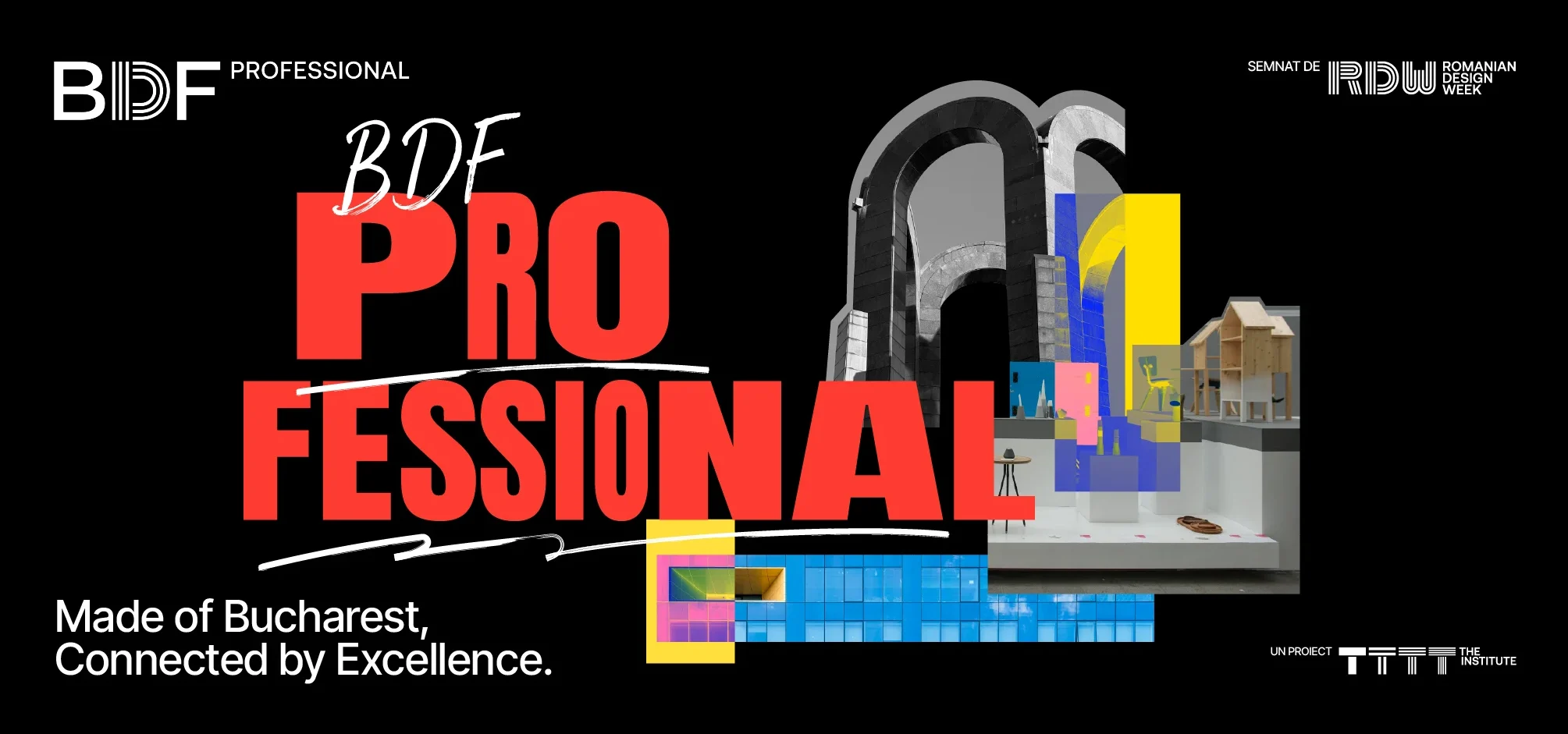
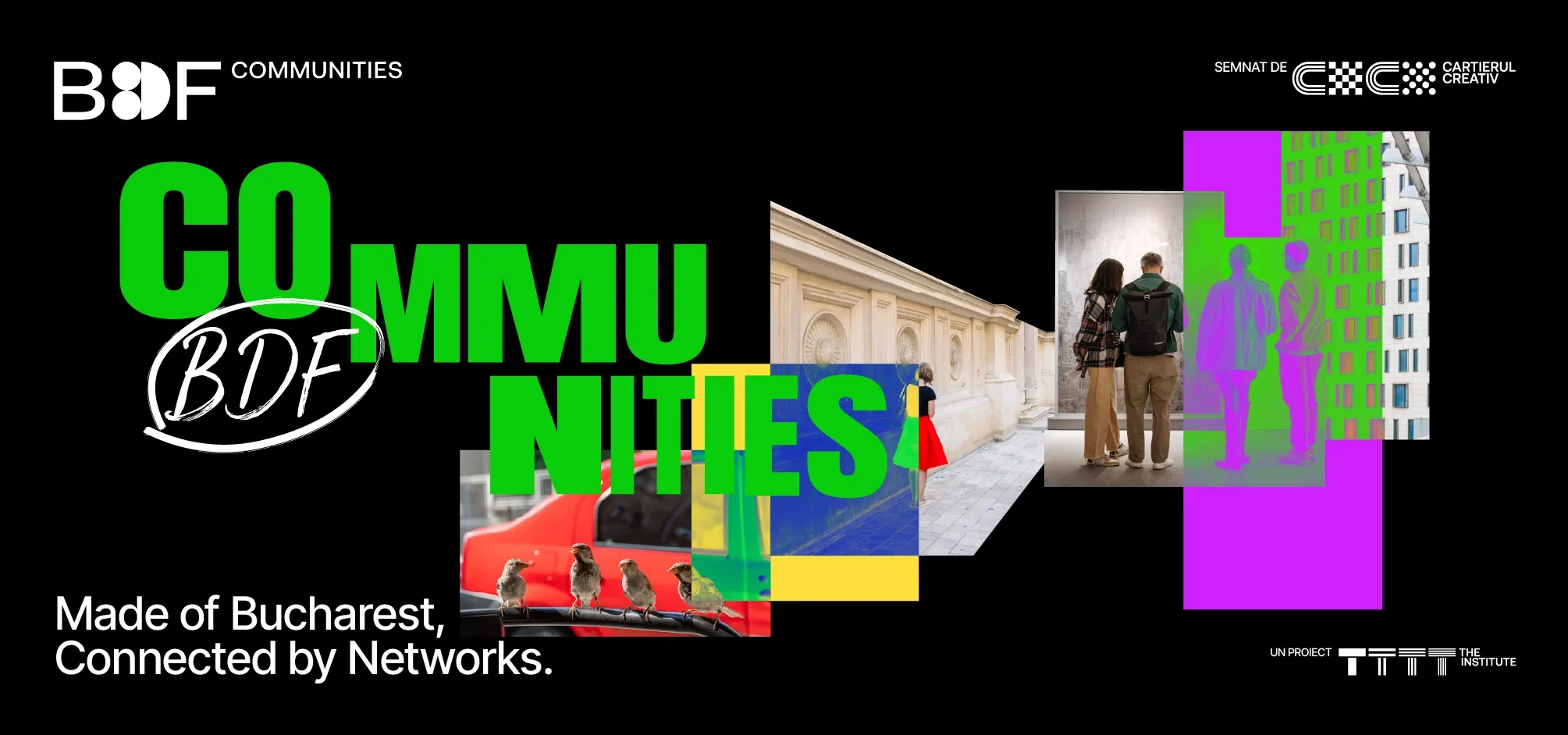
BDF Professional carries Romanian Design Week’s focus on local and international design and architecture. BDF Young extends the DIPLOMA lineage into the next stage of emerging practice. BDF Communities, signed by Cartierul Creativ, activates Amzei, Grivița and Brezoianu through exhibitions and urban interventions.
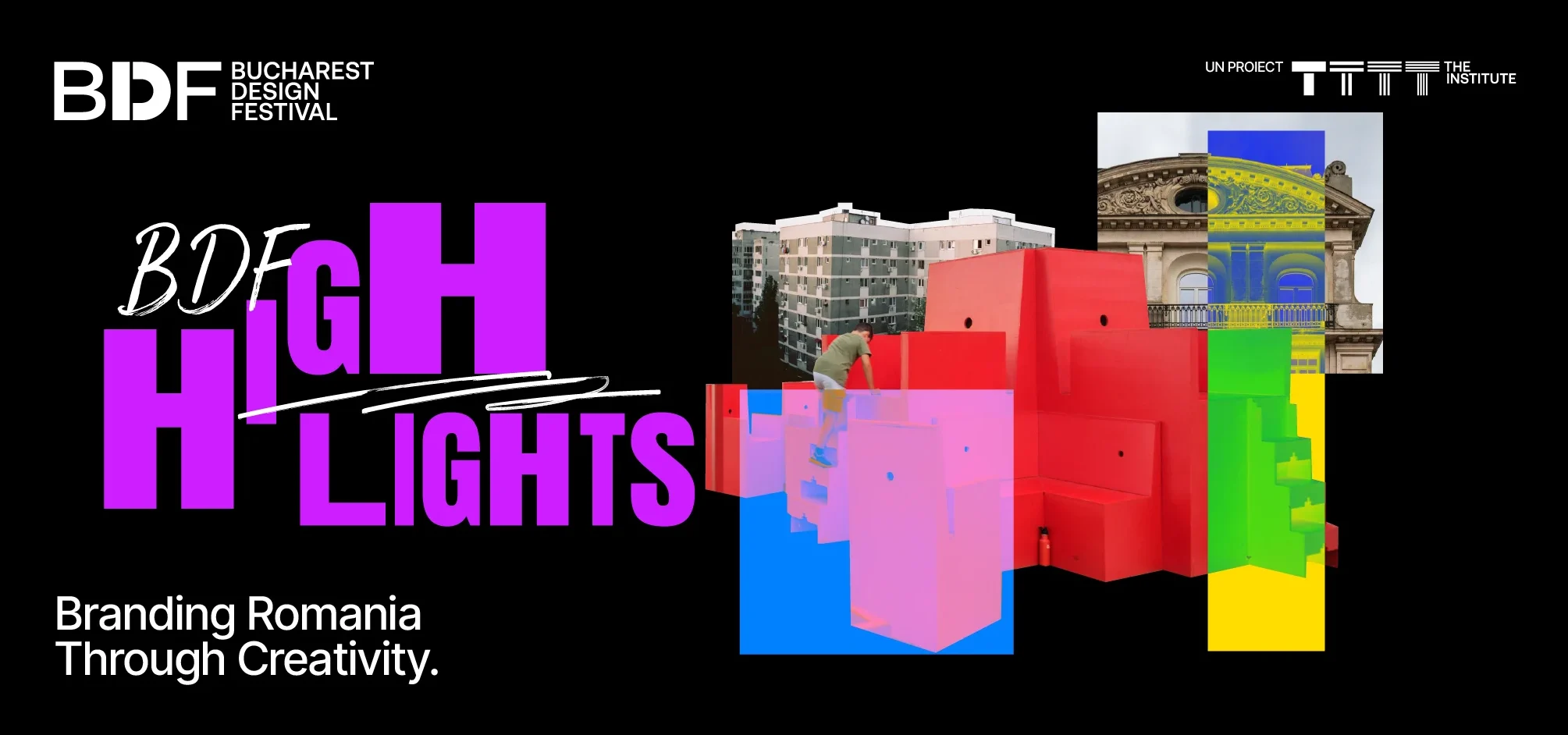
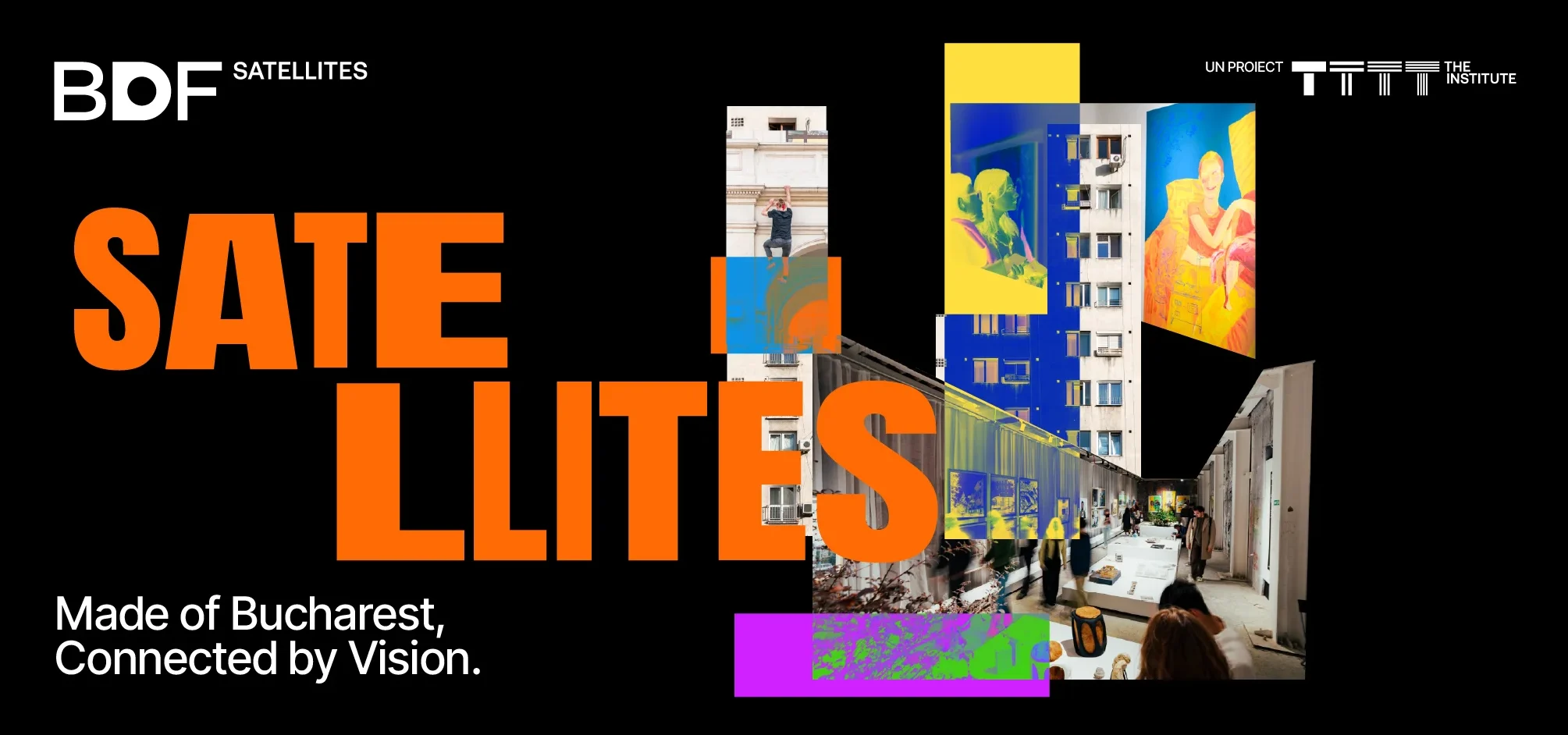
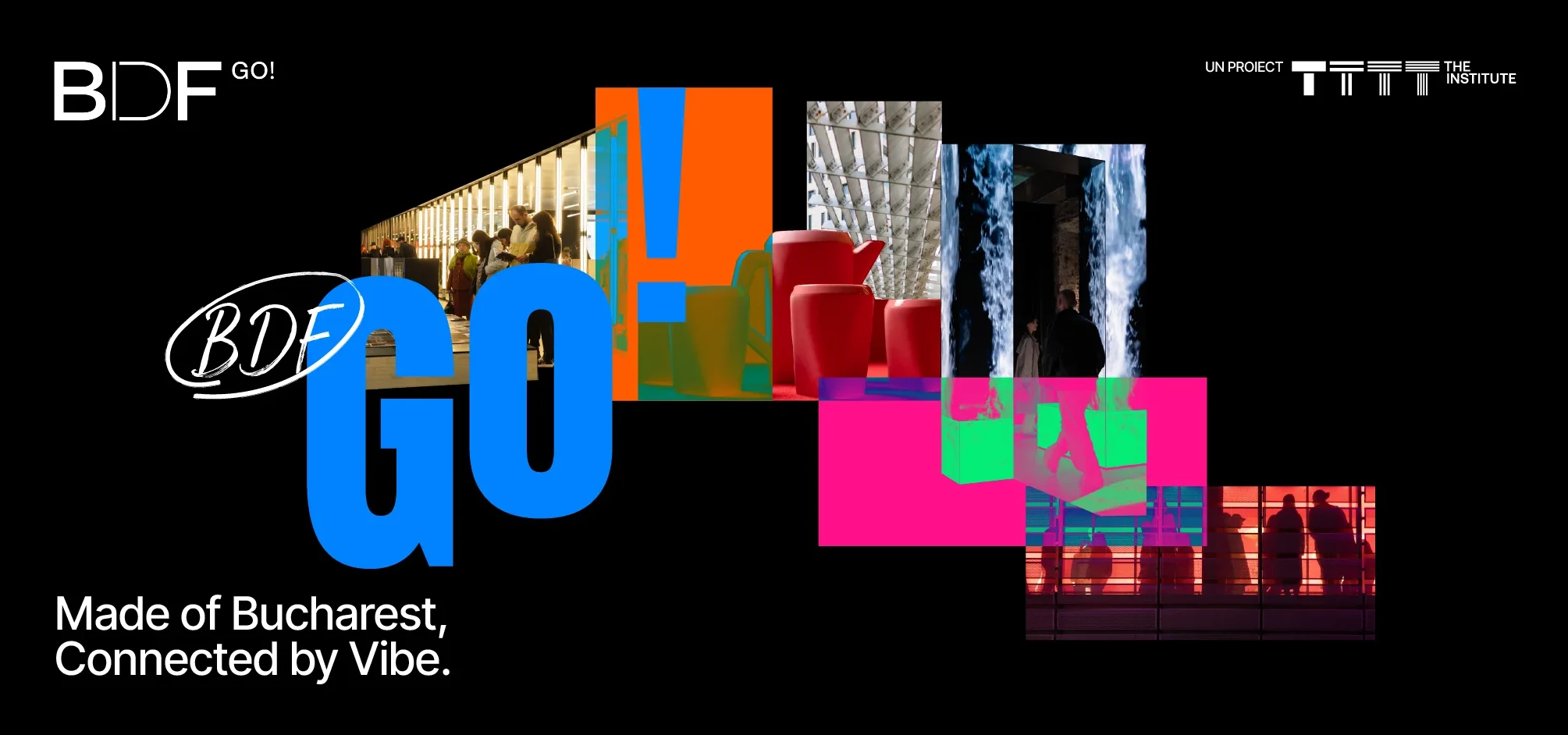
BDF Highlights presents Romanian creators and projects with international impact. BDF Satellites brings independent initiatives into the programme. BDF GO! turns galleries, showrooms, studios, hubs and cultural organisations into a route through the city. One parent brand holds six formats, from professional exchange to neighbourhood discovery.
Three roles
Design is the subject. The discipline, content and reason people arrive.
Bucharest is the lens. The city shapes how people see, curate and experience design.
The festival is the verb. It brings subject and lens together through gathering, movement and exchange.
This subject, lens and verb framework became the strategic test for the project. It guided the architecture, copy, images and campaign. Every decision had to let the city enter the work.
Language
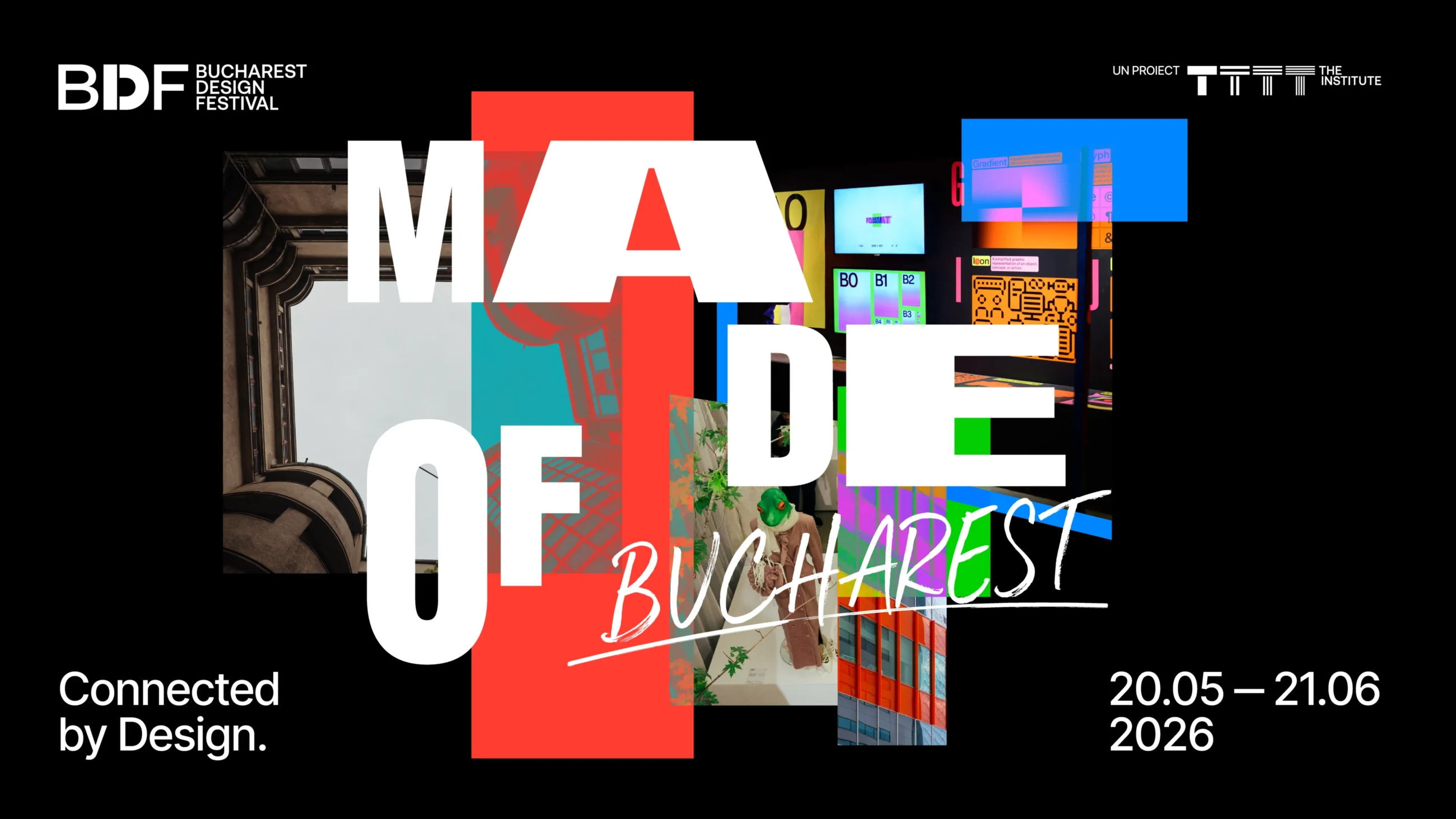
The positioning produced Made of Bucharest. Connected by Design. The phrase moves the city from location to raw material. BDF comes from Bucharest’s collisions: East and West, old and new, order and improvisation, Balkan appetite and European ambition.
The second half gave the architecture a language. BDF Professional became Connected by Excellence. BDF Satellites used Connected by Vision. BDF GO! used Connected by Vibe. BDF Communities used Connected by Networks. The structure keeps the family recognisable while giving every programme its own promise.
Collage
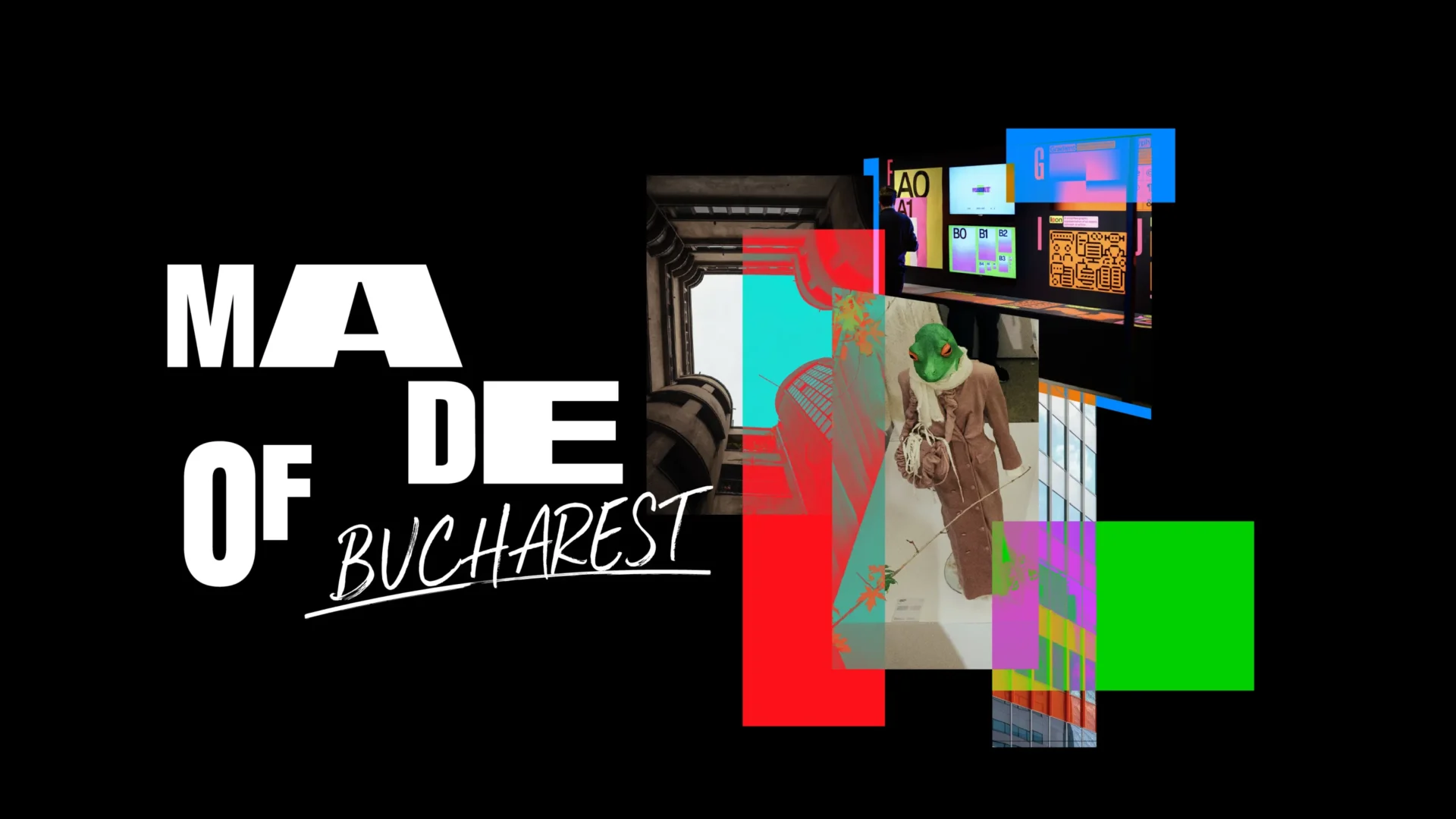
The visual language treats Bucharest as an assembly of fragments. Monumental condensed type meets handwriting. Fluorescent colour interrupts black fields. Buildings, products, rooms, signs and people overlap without resolving into one polished skyline. The system can absorb architecture, graphic design, fashion, visual art, product design and urbanism while retaining the tension of the city that connects them.
The collages also give every format material from its own world. Professional draws from objects and architecture. Communities pulls in streets, exhibitions and neighbourhood encounters. GO! turns venues and night-time movement into a route. The parent identity remains visible across all of them.
The film
The launch manifesto follows the same principle. Glitch invited 18 visual artists who had spent years looking at Bucharest to contribute photographs and footage. The team received hundreds of pieces, mapped them onto words and music, then printed, cut, collated, stitched and animated them in a semi-analog process.
Electric Brother composed an original track. Cezar Junkyard recorded the voice. Diana Radulescu and Dorel Gnatiuc at Kind of Studio handled edit and motion graphics. No single image defines Bucharest. The film builds the city through accumulation and carries the marks of the people who made it.
Public life
The brand moved beyond launch communication during the first edition, held from 20 May to 21 June 2026. The festival used the line Made of Bucharest for a study of how residents see their city, developed with Fundația Comunitară București and Unlock Research. The study asked 400 respondents about attachment, pride and belonging. It found strong attachment to Bucharest alongside a weaker sense of collective community.
That use matters because the platform was designed for more than an annual event campaign. The Institute describes BDF as a long-term project for rebuilding the relationship between Bucharest and its residents. The identity can hold exhibitions, research, public debate, urban routes and future editions inside the same proposition.
Results
The inaugural edition brought together more than 1,000 contributors and welcomed 45,000 visitors. Six formats occupied 10 central festival venues and more than 120 connected locations across the city. BDF GO! linked more than 120 galleries, showrooms, studios, cultural organisations and local businesses through over 170 events.
Read The Institute’s recap of the first edition and explore more work by Glitch.
The launch film received third place in ADC*RO’s February 2026 edition, where the jury described it as “un București distilat prin design”. The official festival recap credits Glitch with the advertising campaign. The work gave a complex cultural infrastructure one public name, one organising idea and a language that can keep expanding with the city.
Credits
Glitch team
Miruna Vasilescu, Ana Maria Dudu, Roxana Panaitescu, Sonia Panait, Domnica Predoiu, Andrei Nicolescu, Simina Leotescu, Dan Stănescu
Visual artists
Vladimir Amzar, Alex Galmeanu, Bogdan Anghel, Dani Ghercă, Tudor Borduz, Dragoș Hanciu, Michele Bressan, Toma Hurduc, Adi Bulboaca, Daniel Kosuth, Cristiana Capota, Denise Lobont, Lavinia Cioaca, Adrian Scutariu, Mihai Ciobanu, Adi Tudose, Vio Dan, Robert Zamfir
Music:
Electric Brother
Voice:
Cezar Junkyard
Edit and motion graphics:
Diana Radulescu and Dorel Gnatiuc, Kind of Studio
The Institute team
Diana Sumanaru, Andrei Bortun, Alexandra Groves, Cristiana Iordache, Raluca Mirel