Every output could become input.
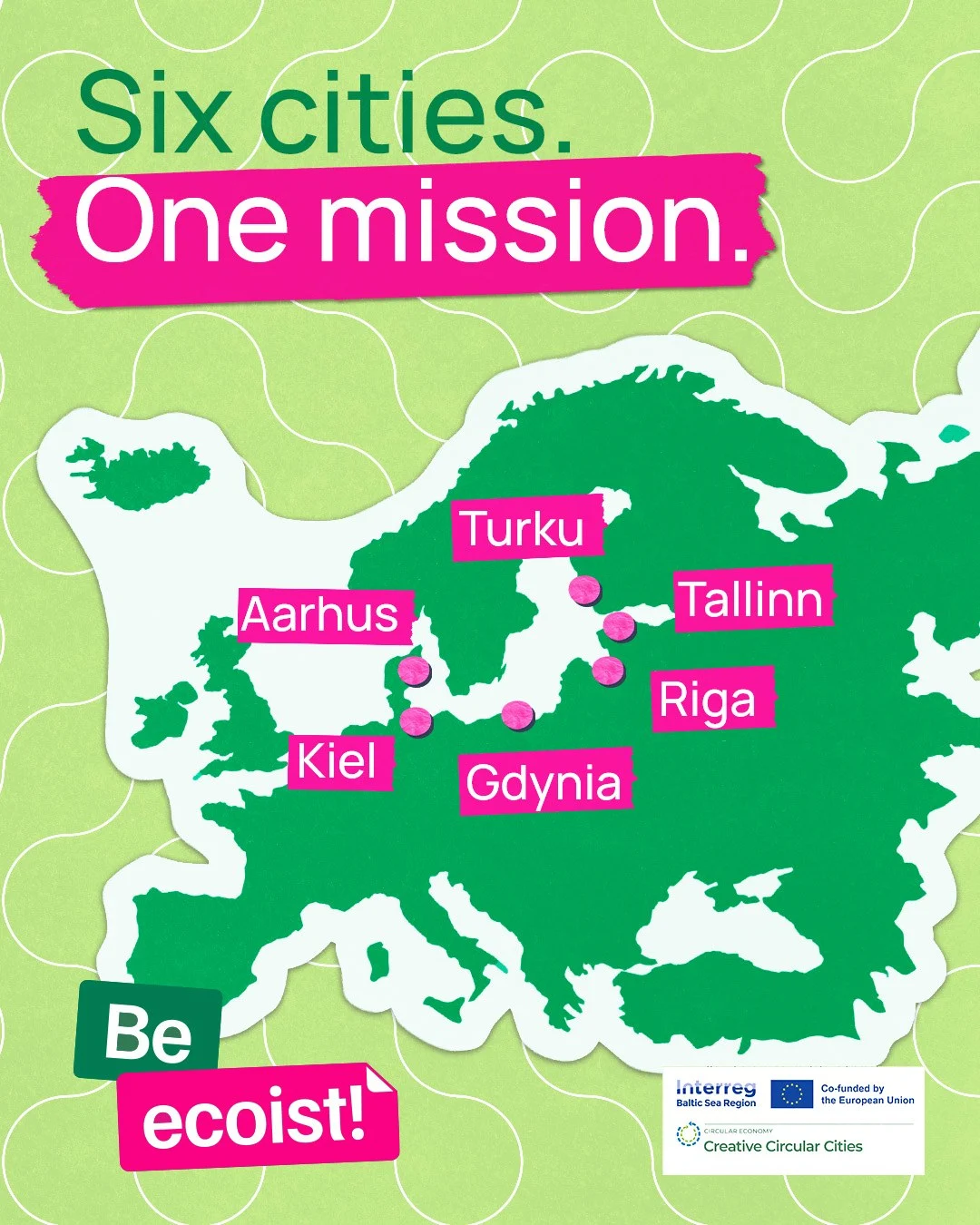
The project archive became the art department.
Creative Circular Cities asks how culture and the creative industries can help cities become more circular. We brought that question into the campaign itself. How could its communication make better use of what the project was already producing?
Our answer became a way of working: take press photos, workshop images, slides, diagrams and pieces of copy, then cut, combine and repurpose them. The campaign could keep finding new material in the life of the project.
Make circularity practical.
Circular economy speaks in systems. Culture speaks in stories. Our strategy brought them together: making the work of six cities understandable through the people, ideas and creative acts behind it.
The same thinking had to reach production. If the project could find new value in existing materials, its campaign could do the same with existing images. That became our visual principle: repurpose what was already there.

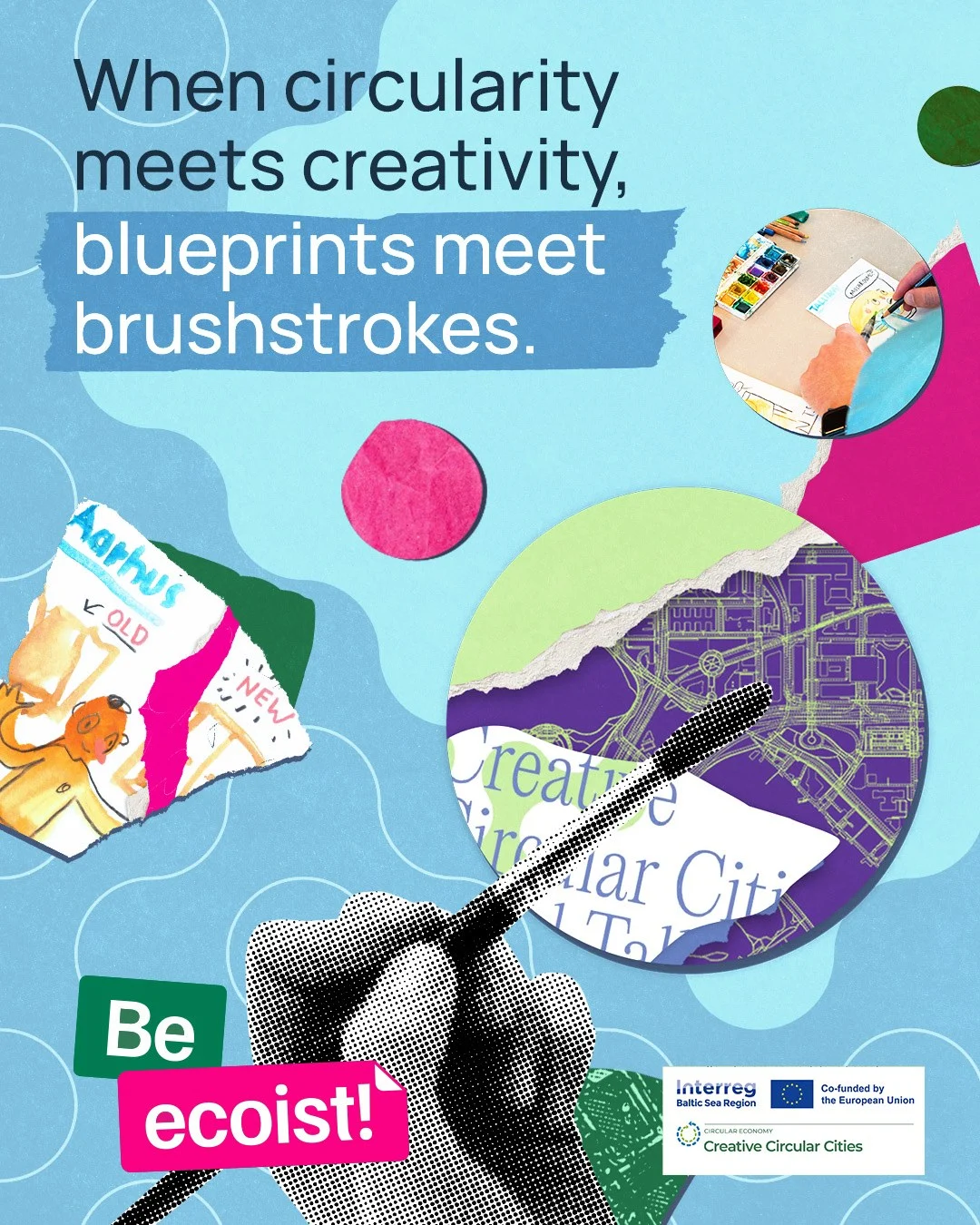
The Glitch
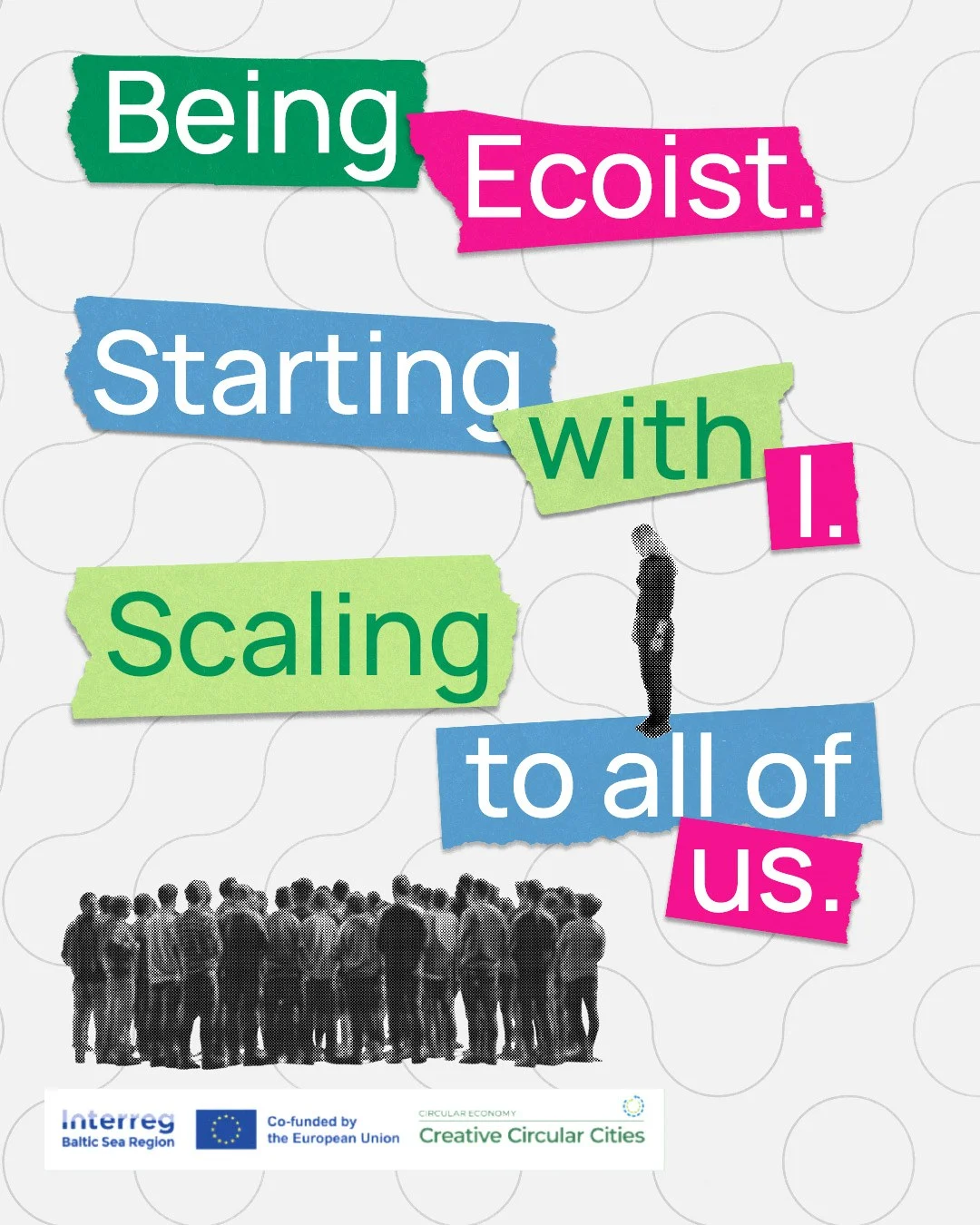
Every output could become input. We took the project’s own photographs, illustrations, icons and working material and gave them another job. A workshop image could leave the recap. A diagram could leave the presentation. Cut apart and brought together through collage, those fragments became the raw material of the campaign.
That made circularity part of the creative process. The archive became our art department, and the project kept adding to it: new activities, new images, new stories to work with. “Be ecoist” was the invitation to the public; repurposing was how we put it into practice ourselves. The campaign could keep making something new from what was already there.
Give people a part.
“Be ecoist” gives people a way into a large subject. Start with what is around you. See waste as material and creativity as a practical force for change. There is room to act before everything is perfect.
For the campaign, that meant looking again at the project’s own leftovers. A photograph in a report, a diagram in a presentation, a line from a workshop: each could have another life in public.

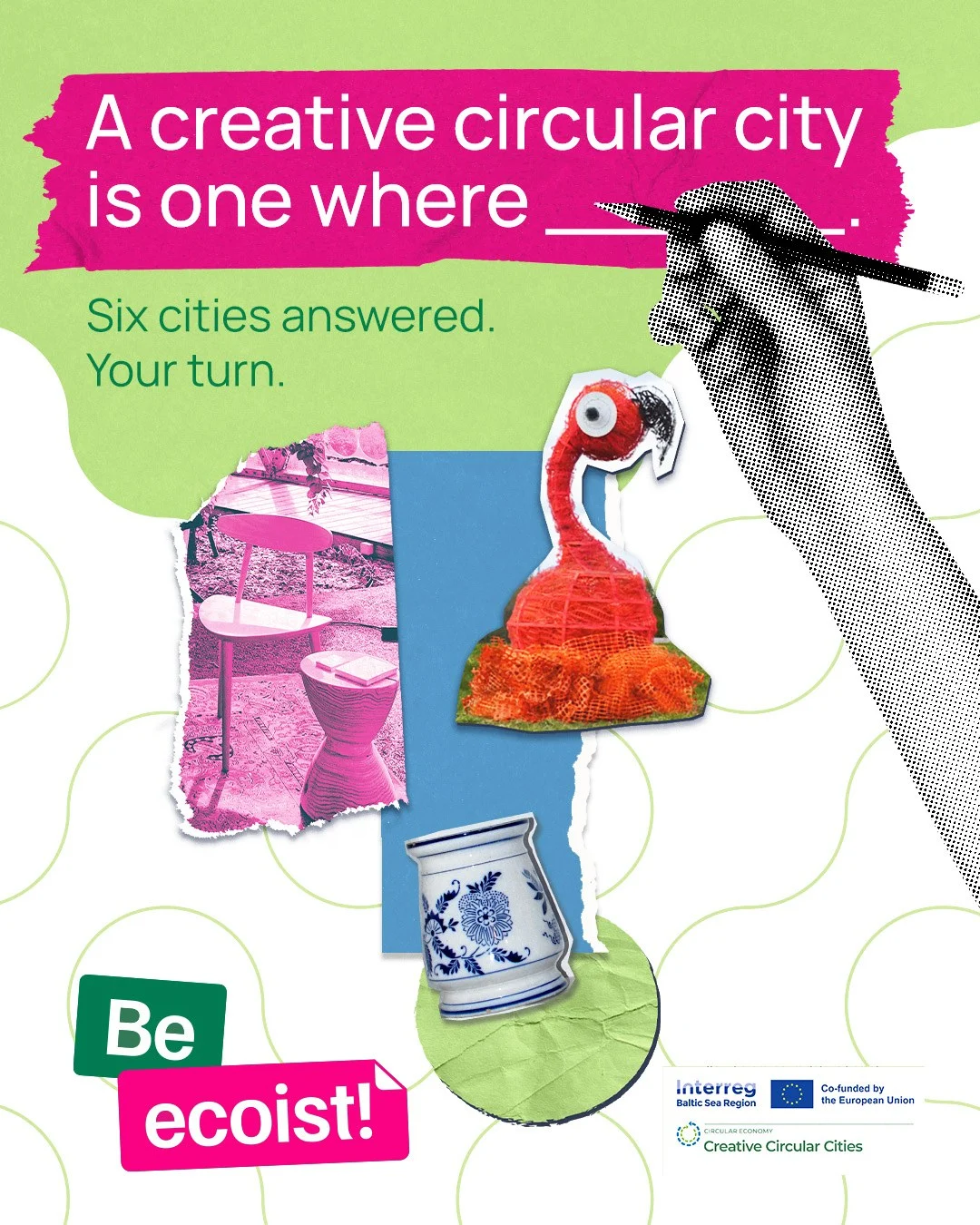
Cut. Combine. Repurpose.
Projects make a lot of material. Much of it stays attached to the moment it was made for. Our original visual proposal treated that archive as a creative resource: photographs, stock imagery, illustrations and icons could all be given another role through collage.
Cutting and recombining changed their job. A press photo could become part of a new visual. A diagram or piece of copy could start another story. The method was designed to travel across key visuals, ads, editorial and motion, with fresh project material feeding the process.
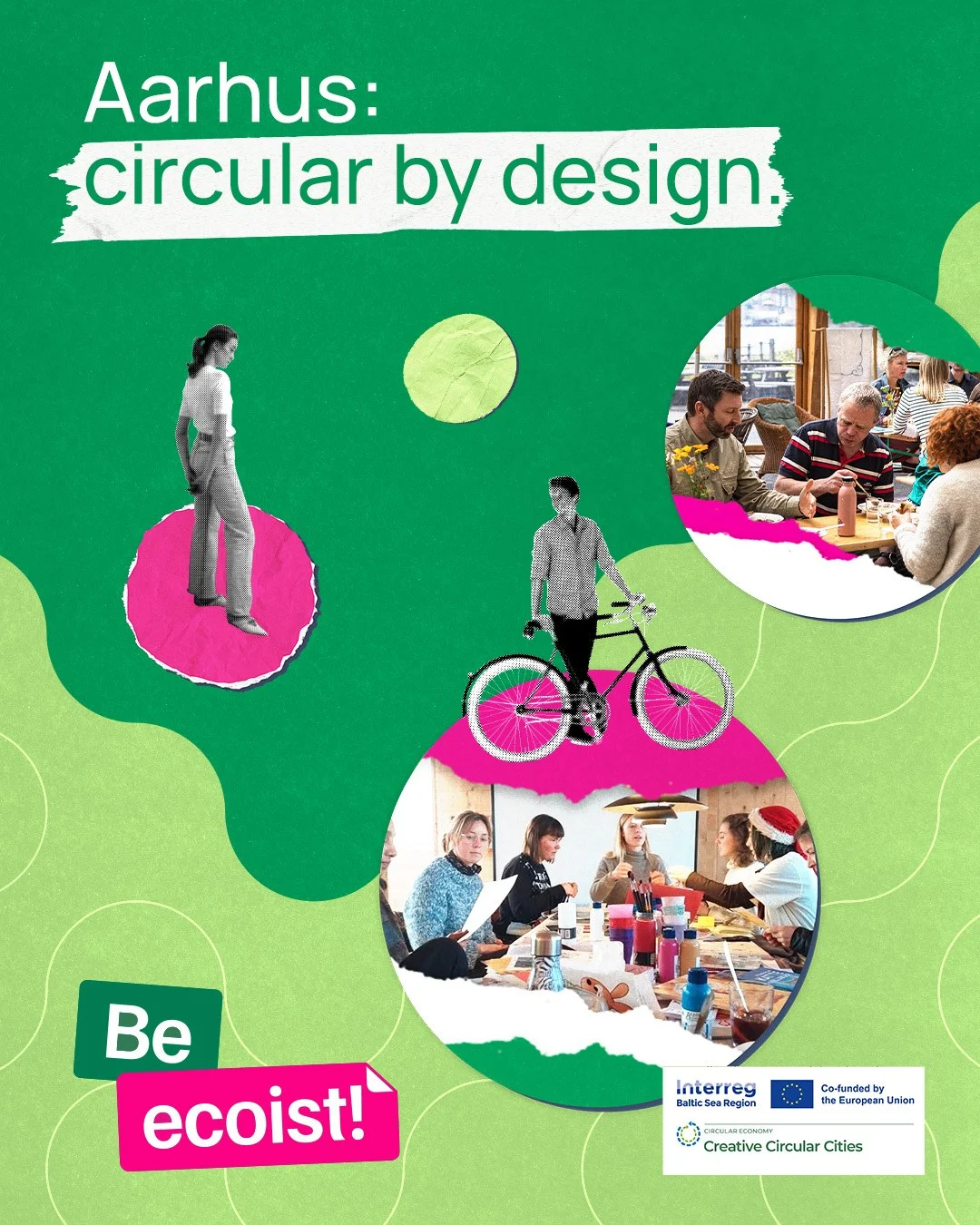
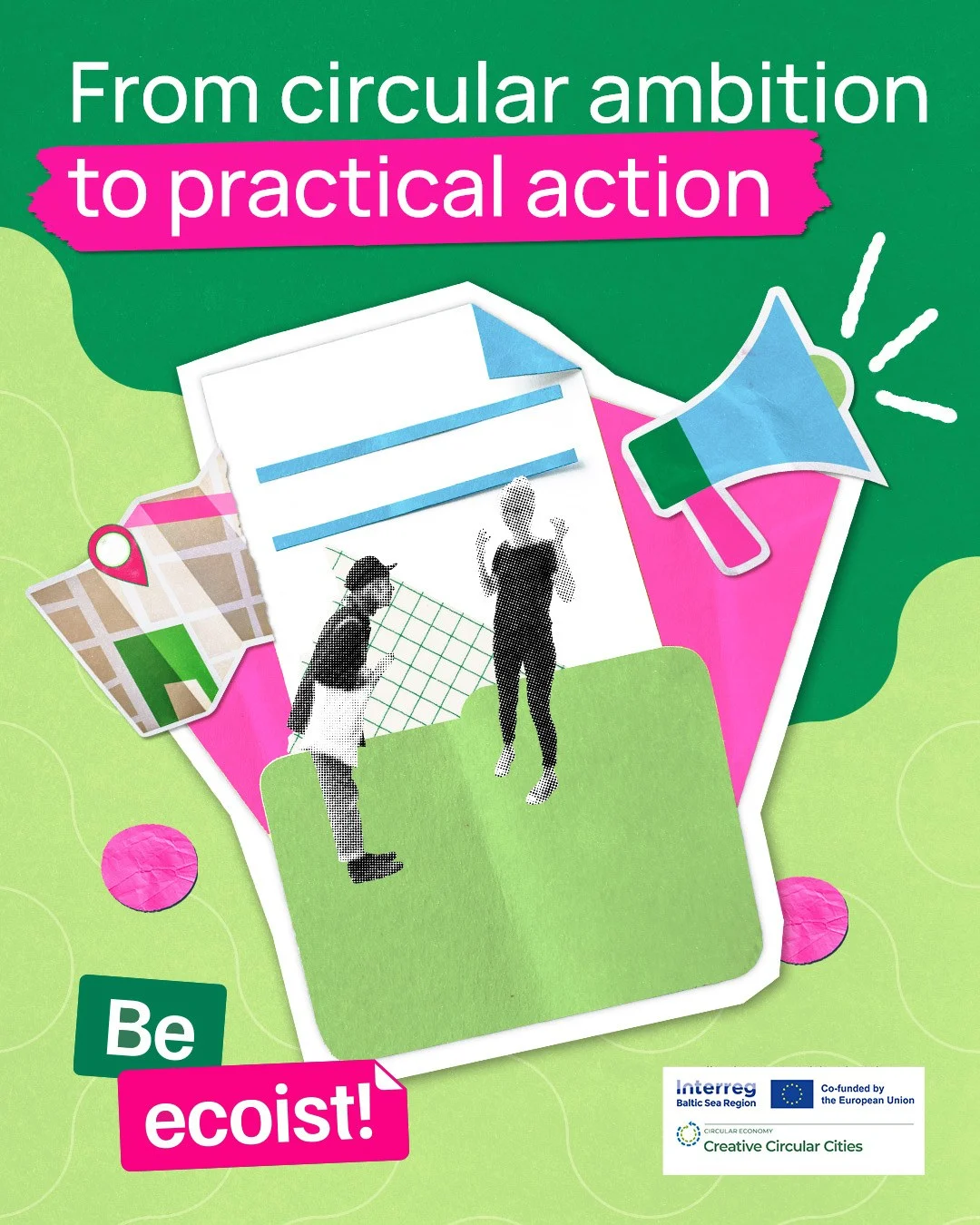
A system that could keep making.
Collage gave reuse a visual form. Type, colour and composition brought varied source material into a recognisable campaign, while leaving room for different subjects and combinations.
The system could carry a city story, a question or a practical resource. Its continuity came from a shared way of making things, with new project material feeding the next piece of communication.
A website with somewhere to go.
A campaign can make someone curious. The website has to reward that curiosity. We organised CCC around the six cities, a shared library and a PR toolset, giving people different routes into the same body of work.
A city profile gives an experiment its local context. A case study explains what happened. The library brings methods, guidance and downloadable resources together, so another team can find something to adapt. The editorial structure helps those pieces make sense beyond the original project meeting.
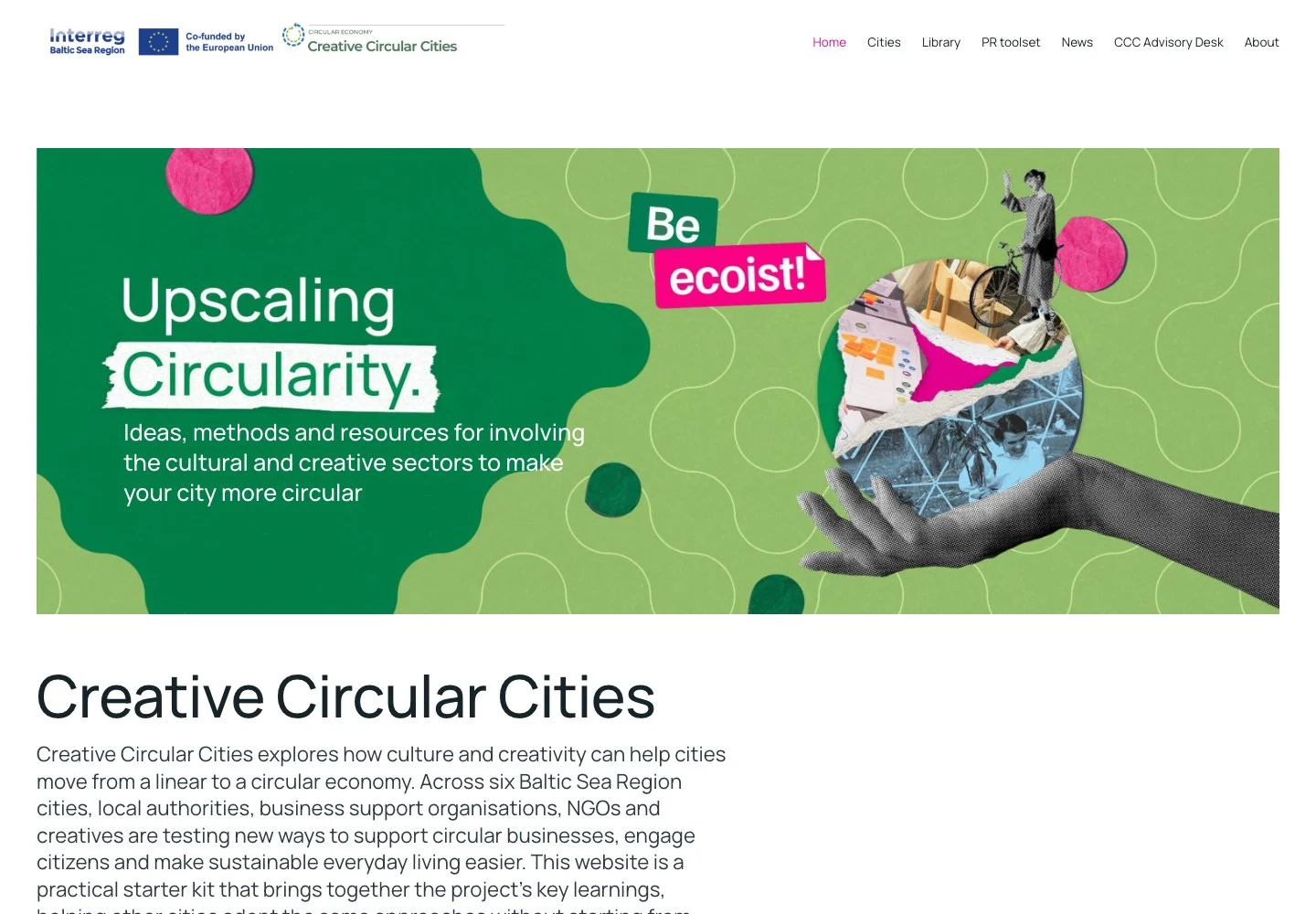
Built to keep being useful.
We developed the site in WordPress, with dedicated layouts for the project’s recurring content: city profiles, case studies, resources and news. A consistent structure lets very different material sit together without making every new page a design project of its own.
The responsive build carries that hierarchy onto smaller screens. Resource cards distinguish downloads from web pages and material still to come. We also prepared editor access and a back-end walkthrough for the project team, so the site could keep growing as new work arrived.
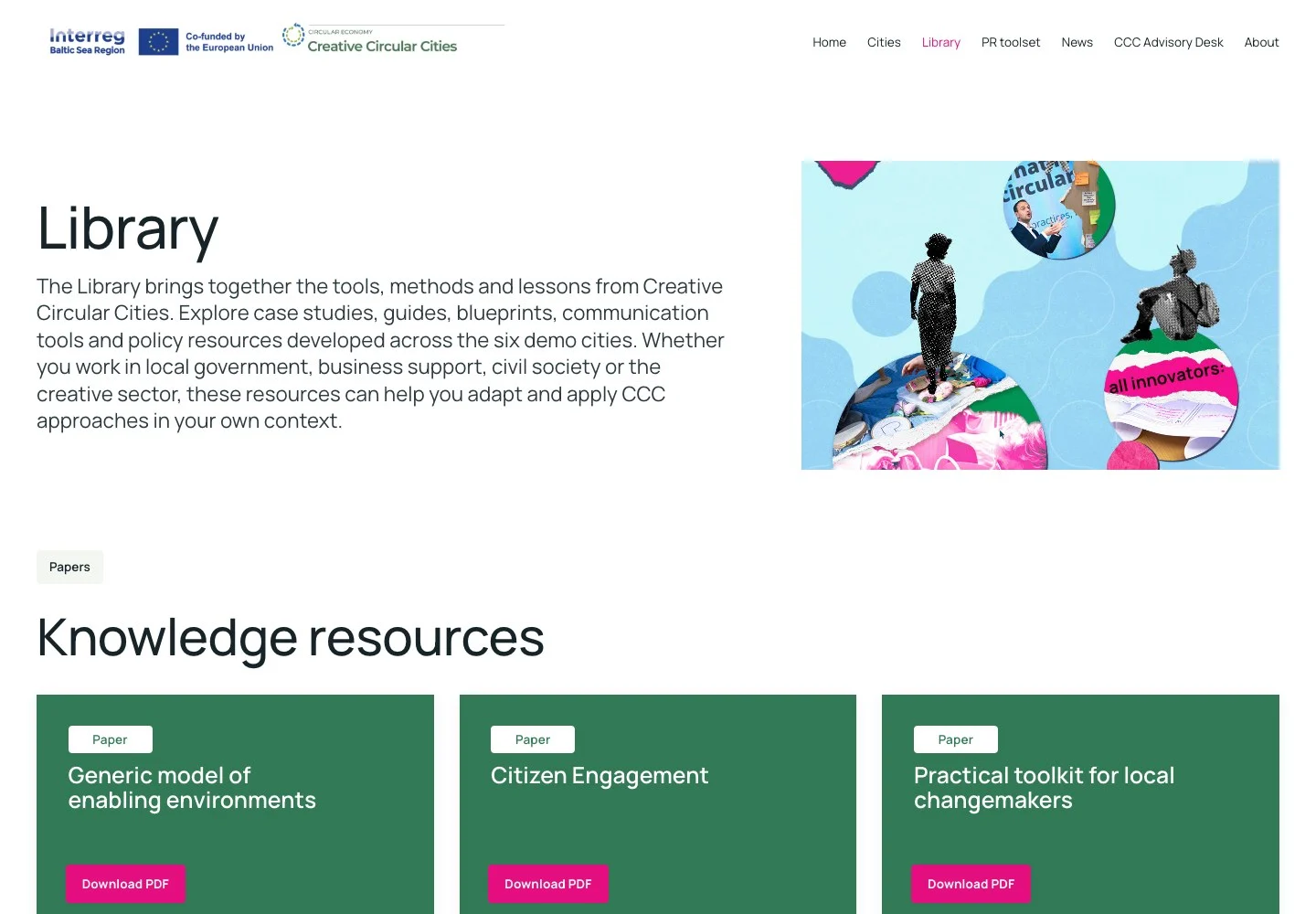
Give the material another life.
The website organised the project’s cities, resources and stories so people could follow an idea further. The campaign opened a door; the editorial work helped explain what was behind it.
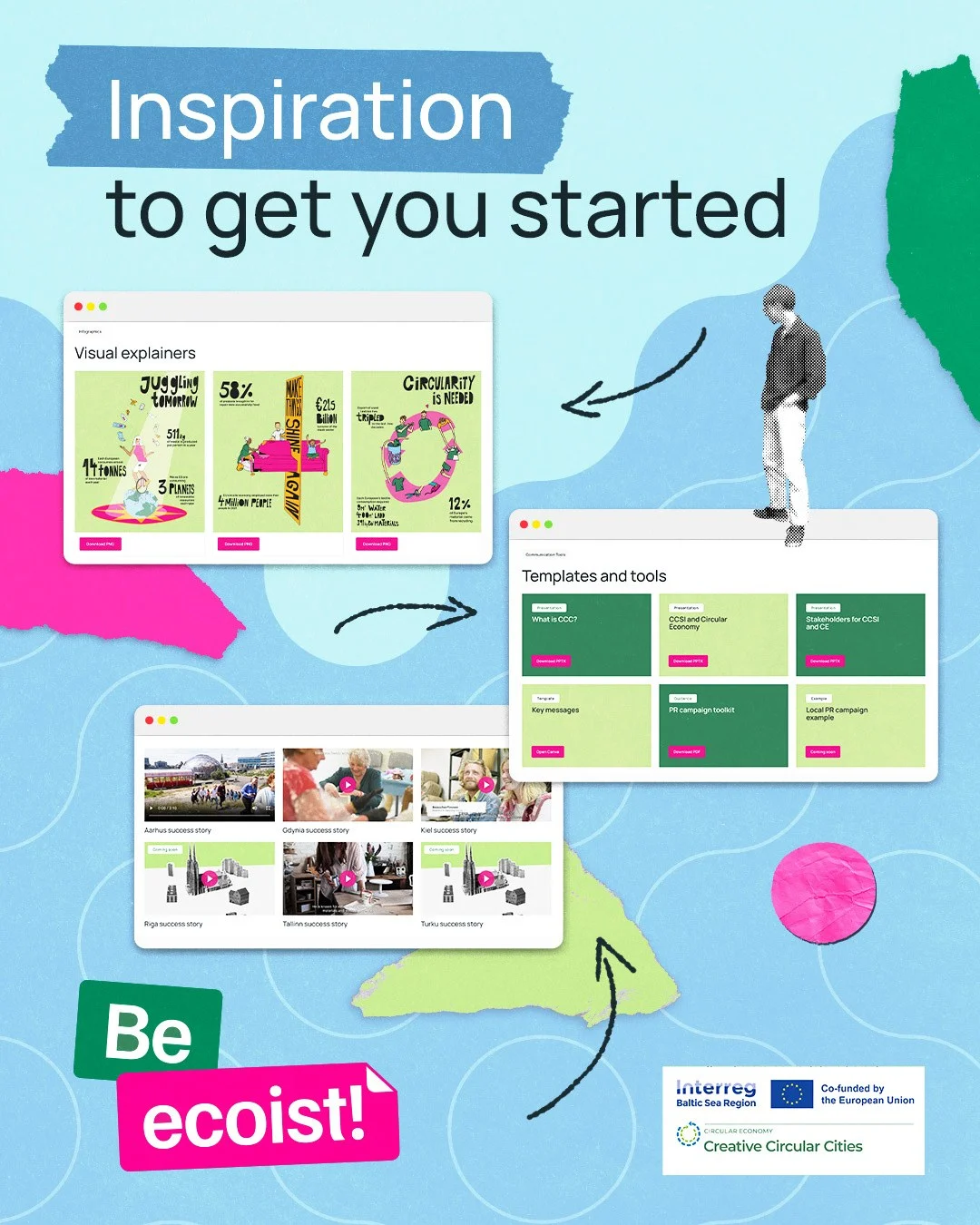
The PR toolset extends that approach to other communicators, bringing presentations, key messages, videos and campaign assets into one place. It gives project partners material they can pick up and use in their own contexts. Across the work, our starting question stayed useful: what do we already have, and what else could it do?
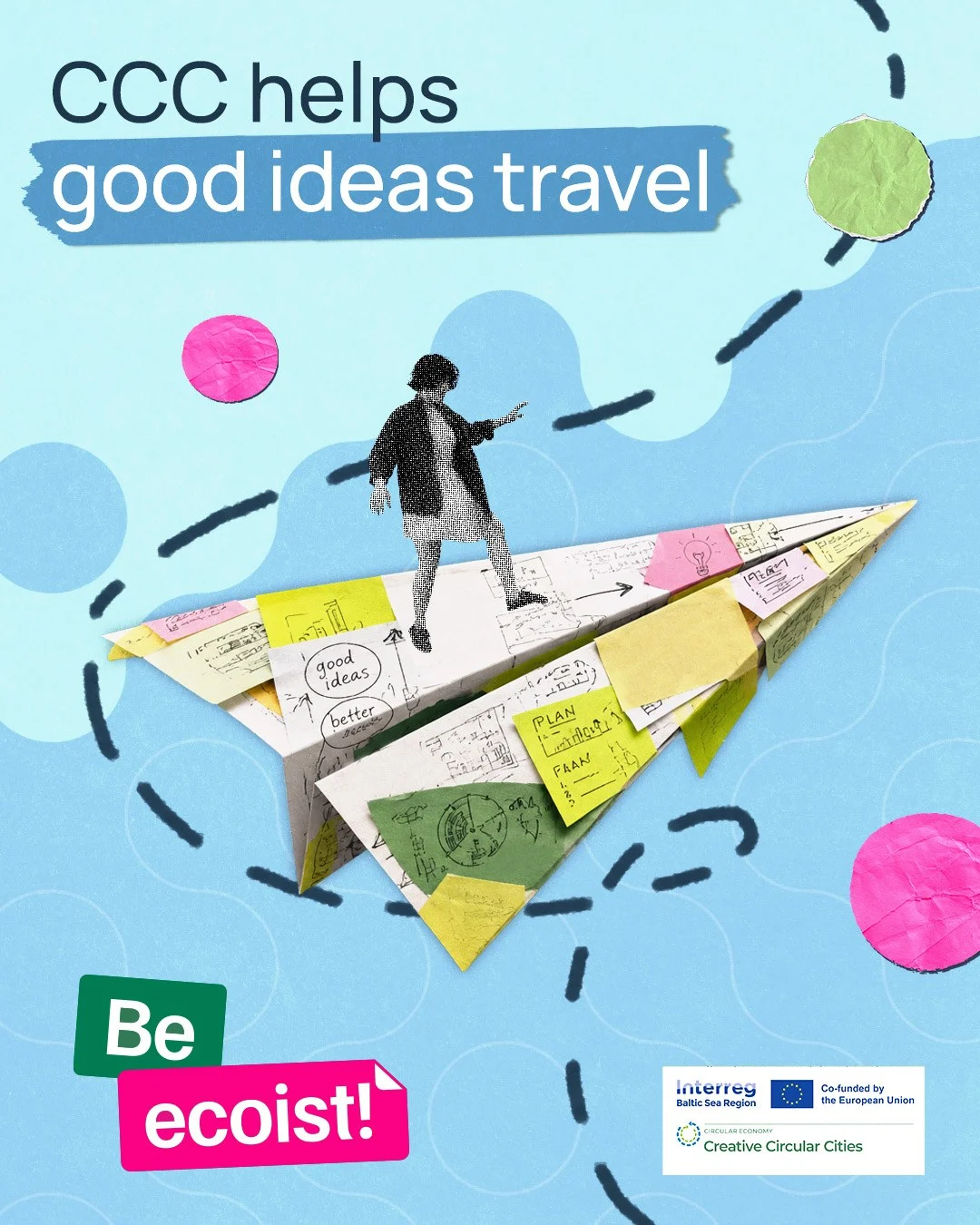
Stories beyond the project.
The city stories also travelled through PR and paid media placements. We adapted the material for publications covering business, cities and sustainability, connecting each outlet with an angle relevant to its readers: Gdynia’s bulky-waste model, circular thinking in urban life, or creative-sector skills in Tallinn.
That work gave the campaign destinations beyond its own channels. The links below bring together partner articles and editorial coverage. They show how the same project can enter different conversations while keeping the local work at the centre.
What we made.
A campaign concept and visual system built around reuse, supported by communication strategy, website design and editorial work, social content and PR.
The central idea lives in the production method. The project makes things. Those things become campaign material. The archive keeps growing, and the communication has somewhere to begin again.
Visit Creative Circular Cities.